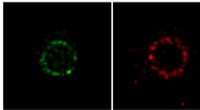
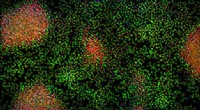
* Basic Units of Life: Cells are the smallest unit of life that can carry out all the processes necessary for life. They are self-contained, meaning they can:
* Obtain and utilize energy: Cells break down nutrients to generate energy for their processes.
* Synthesize proteins and other molecules: They produce the components they need to function and grow.
* Reproduce: Cells divide to create more cells, allowing for growth and repair.
* Respond to stimuli: Cells can react to changes in their environment.
* Specialized Functions: Different types of cells have specialized functions, working together to form tissues, organs, and organ systems. For example:
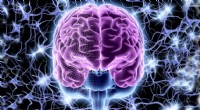
* Nerve cells: Transmit signals throughout the body.
* Muscle cells: Allow for movement.
* Blood cells: Transport oxygen and fight infection.
* Bone cells: Provide structure and support.
* Interconnected Systems: Cells don't exist in isolation. They communicate and work together in complex, coordinated networks to maintain the body's overall function.
* Essential for Survival: Without cells, the body couldn't perform any of the vital processes necessary for survival:
* Breathing: Cells require oxygen for energy production.
* Digestion: Cells break down food to obtain nutrients.
* Circulation: Cells rely on blood to transport nutrients and oxygen.
* Waste removal: Cells produce waste products that must be eliminated.
* Growth and development: Cells are essential for building and repairing tissues.
* Reproduction: Cells are the basis of the reproductive process.
In essence, cells are the foundation upon which the entire human body is built. They are the smallest units capable of carrying out life's functions, and without them, we wouldn't exist.