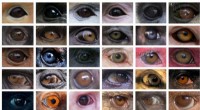
1. Variation: Individuals within a population exhibit differences in their traits, whether those are physical characteristics, behaviors, or even genetic makeup. This variation is essential for evolution because it provides the "raw material" for natural selection.
2. Inheritance: These variations are at least partially heritable, meaning that they can be passed down from parents to offspring. This allows for traits that are beneficial in a given environment to become more prevalent in the population over generations.
3. Selection: The environment exerts pressure on individuals, favoring those with traits that are better suited for survival and reproduction. These individuals are more likely to pass on their advantageous traits, leading to a gradual shift in the population's characteristics over time.
It is important to note that these three components are not criteria that something must meet to be considered evolution. They are rather the driving forces of the process itself.
Evolution is not a simple process of "things changing over time." It is a complex interplay of variation, inheritance, and selection that results in the adaptation of populations to their environment.