Here's why:
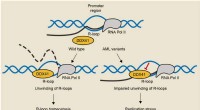
* DNA polymerase, the enzyme responsible for building the new DNA strand, can only add nucleotides to the 3' hydroxyl (-OH) group of the existing strand.
* The leading strand is synthesized continuously in the same direction as the unwinding of the DNA helix, which means it follows the movement of the replication fork.
* The 5' end of the leading strand is the end that is exposed as the helix unwinds, and the 3' end is the end that is growing.
* Therefore, DNA polymerase can only add nucleotides to the 3' end of the leading strand, resulting in replication happening in the 5' to 3' direction.