Food Acquisition:
* Bacteria: Most bacteria are heterotrophs, meaning they obtain their food from other organisms. They can be:
* Saprophytes: They decompose dead organic matter (like decaying plants or animals) and absorb nutrients.
* Parasites: They live on or in other living organisms (hosts) and derive nutrients from them, often causing harm to the host.
* Mutualists: They live in close association with other organisms, both benefitting from the relationship.
* Chemoautotrophs: They obtain energy by oxidizing inorganic compounds like sulfur or iron.
* Photoautotrophs: They use sunlight to produce their own food through photosynthesis, like some cyanobacteria.
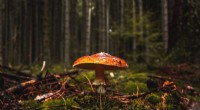
* Fungi: Fungi are also heterotrophs and mostly saprophytes, decomposing dead organic matter. Unlike bacteria, fungi secrete enzymes outside their bodies to break down complex molecules into smaller ones that they can absorb.
Reproduction:
* Bacteria: Bacteria reproduce asexually through binary fission, where a single cell divides into two identical daughter cells. Some bacteria can also exchange genetic material through horizontal gene transfer, which involves processes like conjugation, transformation, and transduction.
* Fungi: Fungi can reproduce both sexually and asexually.
* Asexual reproduction: They can produce spores (tiny, reproductive cells) through various methods like budding or fragmentation.
* Sexual reproduction: They involve the fusion of two haploid nuclei to form a diploid zygote, which then undergoes meiosis to produce haploid spores.
Key Differences in Summary:
| Feature | Bacteria | Fungi |
|----------------|----------------------|-----------------------|
| Food Source | Heterotrophic, various | Heterotrophic, mostly saprophytes |
| Food Acquisition | Absorption or ingestion | Extracellular digestion |
| Reproduction | Mostly asexual (binary fission) | Asexual and sexual |
In conclusion, while both bacteria and fungi are heterotrophic, they have distinct mechanisms for obtaining food and reproducing. Bacteria rely on various methods like decomposition, parasitism, and mutualism, while fungi primarily decompose dead organic matter through extracellular digestion. Similarly, their modes of reproduction differ significantly, with bacteria primarily using binary fission and fungi employing both asexual and sexual methods.