Instead, we can say that protists have evolved certain features that allow them to exploit a wider range of environments and lifestyles. Some of these features include:
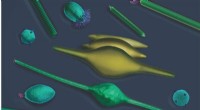
1. Compartmentalization and Organelles: Protists possess a nucleus and other membrane-bound organelles, such as mitochondria and chloroplasts, which compartmentalize cellular functions. This allows for increased efficiency and specialization within the cell compared to bacteria, which are prokaryotic and lack such internal structures.
2. Larger Cell Size: Protists are typically larger than bacteria, allowing for greater complexity and potentially more specialized functions.
3. Diverse Modes of Nutrition: Protists exhibit a greater diversity in their modes of nutrition compared to bacteria. They can be heterotrophic (consuming other organisms), autotrophic (producing their own food through photosynthesis), or mixotrophic (combining both methods). This allows them to thrive in various ecological niches.
4. Advanced Movement: Many protists have developed more complex mechanisms for movement than bacteria, such as flagella, cilia, and pseudopodia. This allows them to actively navigate their environments and seek out food or avoid predators.
5. Sexual Reproduction: While not universal, some protists engage in sexual reproduction, increasing genetic diversity and allowing for faster adaptation to changing environments.
However, it's crucial to remember that bacteria have also evolved incredible adaptations and are still incredibly successful:
* Metabolic Diversity: Bacteria possess a vast range of metabolic pathways, allowing them to thrive in diverse environments, including extreme conditions like hot springs or deep-sea vents.
* Rapid Reproduction: Bacteria can reproduce very quickly, allowing them to adapt to changing environments faster than many protists.
* Horizontal Gene Transfer: Bacteria can share genetic information through horizontal gene transfer, facilitating rapid evolution and diversification.
In conclusion, both protists and bacteria are highly successful and diverse life forms, each with their own unique adaptations and evolutionary history. They are not "better" or "worse" than each other, but rather represent different branches of the tree of life that have evolved in response to different ecological pressures.