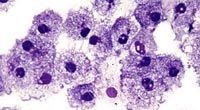
1. Binary Fission: This is the simplest form of asexual reproduction and is common in single-celled organisms like bacteria and amoeba. The parent cell replicates its DNA and then divides into two identical daughter cells.
2. Budding: In this method, a new organism develops as an outgrowth or bud on the parent organism. The bud eventually detaches and becomes an independent organism. Examples include yeast and hydra.
3. Fragmentation: This involves the parent organism breaking into fragments, each of which develops into a new individual. This is common in organisms like flatworms, sea stars, and some plants.
4. Spore Formation: Spores are specialized reproductive cells that can develop into new individuals. Organisms like fungi, ferns, and mosses reproduce using spores. These spores are often released from the parent and can travel through the air or water to find suitable environments for growth.