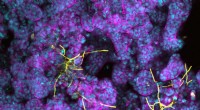
Endosymbiosis is a fascinating biological phenomenon where one organism lives inside another organism, forming a mutually beneficial relationship. This symbiotic relationship is key to the evolution of eukaryotic cells, the cells that make up plants, animals, fungi, and protists.
Here's a breakdown of endosymbiosis:
1. The Players:
* Host: The larger organism that provides shelter and resources.
* Endosymbiont: The smaller organism that lives inside the host.
2. The Benefits:
* Host: The endosymbiont often provides the host with essential nutrients, energy, or specialized functions.
* Endosymbiont: The host provides protection, a stable environment, and access to resources.
3. The Evolution:
* Over time, the endosymbiont becomes increasingly integrated with the host: Its DNA might become incorporated into the host's genome, and it might lose some of its independent functions.
* This integration leads to the development of new cellular structures: For example, the mitochondria and chloroplasts found in eukaryotic cells are thought to have originated from endosymbiotic bacteria.
4. The Examples:
* Mitochondria: These organelles, responsible for cellular respiration, are believed to have originated from aerobic bacteria that were engulfed by primitive eukaryotic cells.
* Chloroplasts: These organelles, responsible for photosynthesis in plants and algae, are believed to have originated from photosynthetic bacteria that were engulfed by eukaryotic cells.
5. The Significance:
Endosymbiosis is a major evolutionary event that played a crucial role in shaping life on Earth. It led to the emergence of complex eukaryotic cells, which paved the way for the evolution of diverse and sophisticated organisms.
In short, endosymbiosis is a powerful evolutionary force that resulted in a win-win situation for both participating organisms, ultimately shaping the very foundation of life as we know it.