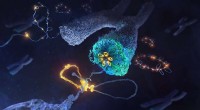
* DNA Replication: This is the process by which a cell creates an exact copy of its DNA before cell division.
* Conservative Replication: This would mean that the original DNA strand remains completely intact, and a completely new, identical strand is made.
* Dispersive Replication: This would mean that the original DNA strand is broken up into fragments, and these fragments are mixed with new pieces to form two new strands.
Semiconservative Replication is the Correct Model:
* Each new DNA molecule consists of one original strand (from the parent molecule) and one newly synthesized strand.
* This means that the DNA molecule is "half-old" and "half-new," hence the term "semiconservative."
Visualizing Semiconservative Replication:
Think of it like unzipping a zipper. The two strands of DNA separate, and each acts as a template for a new strand to be built. Each new strand is complementary to the original strand it's paired with.
Why is semiconservative replication important?
* Accuracy: It ensures that the genetic information is accurately copied, minimizing errors.
* Efficiency: The process is very efficient, allowing for rapid cell division.
* Stability: It contributes to the stability of the genome by preserving one of the original DNA strands.
Let me know if you'd like a more detailed explanation of the process or have any other questions!