Here's a breakdown:
* Pheromones are chemical signals that animals use for communication. In this case, the female Japanese beetle releases pheromones to attract males for mating.
* Male beetles have specialized sensory organs on their antennae that detect these pheromones.
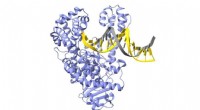
* These organs contain receptor proteins that bind to the specific pheromone molecules.
* The binding of the pheromone to the receptor triggers a signal transduction pathway within the male beetle's cells, ultimately leading to behavioral changes, such as flying towards the source of the pheromone.
The structure inside the cell involved in pheromone detection is the receptor protein. It's a specific protein located on the surface of specialized sensory cells in the antennae. The receptor protein is designed to fit precisely with the shape of the female pheromone molecule, allowing for a strong binding interaction. This interaction initiates the signaling process that informs the male beetle about the presence of a potential mate.
So, instead of breaking down the pheromone, the male beetle's cells bind it to a specific receptor protein, triggering a signal that guides its behavior.