Here's why enzymes exhibit this specificity:
1. Shape Complementarity:
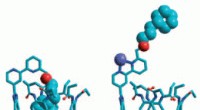
* Lock and Key Model: The active site of an enzyme has a specific shape that complements the shape of the substrate. Like a lock and key, the substrate fits precisely into the active site. This precise fit is crucial for the enzyme to bind the substrate and catalyze the reaction.
* Induced Fit Model: This model expands upon the lock and key model. It suggests that the active site is flexible and can adjust its shape slightly to better accommodate the substrate. This adjustment helps to optimize the interaction between the enzyme and substrate.
2. Chemical Interactions:
* Non-covalent Bonds: The active site of an enzyme contains specific amino acid residues that form non-covalent bonds (hydrogen bonds, ionic bonds, van der Waals forces) with the substrate. These bonds are weak but numerous, contributing to the overall binding strength.
* Specificity of Interactions: The precise arrangement of amino acid residues in the active site dictates the type of chemical interactions that can occur with the substrate. This specificity ensures that only the correct substrate can bind and undergo the catalyzed reaction.
3. Importance of Specificity:
* Efficiency: Specificity allows enzymes to catalyze reactions at high rates, focusing on a specific reaction without wasting resources on unwanted side reactions.
* Regulation: Specificity enables cells to control and regulate metabolic pathways by ensuring that each enzyme acts on its specific substrate, preventing unwanted reactions from occurring.
* Cellular Organization: Enzymes are often localized within specific cellular compartments, further contributing to the organization and efficiency of metabolic processes.
Exceptions to Specificity:
While enzymes are generally highly specific, some exceptions exist:
* Broad Specificity: Some enzymes can catalyze reactions involving multiple substrates that share similar structural features.
* Evolutionary Adaptation: Over time, enzymes can evolve to bind to new substrates, particularly in response to environmental changes or exposure to new molecules.
Overall, the specificity of enzymes is a fundamental principle in biochemistry, enabling efficient and precise catalysis within living organisms.