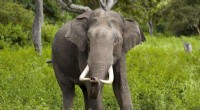
* Variation: Organisms within a population exhibit natural variations in their traits, due to mutations and other genetic factors.
* Differential Survival and Reproduction: Individuals with traits better suited to their environment are more likely to survive and reproduce successfully, passing on those advantageous traits to their offspring.
* Heritability: These advantageous traits are heritable, meaning they can be passed down from parents to offspring.
Over time, this process leads to a gradual shift in the genetic makeup of a population, as traits that increase survival and reproduction become more common.
Other factors can influence evolution, but they are not the primary drivers:
* Genetic Drift: Random changes in allele frequencies, especially significant in small populations.
* Gene Flow: The movement of genes between populations, which can introduce new alleles and alter allele frequencies.
* Mutations: The ultimate source of new genetic variations, although they occur at a relatively low rate.
Important Note: While natural selection is the primary force, it is crucial to understand that evolution is not a goal-oriented process. It does not have a "purpose" to create "better" or "more advanced" organisms. It simply favors traits that increase an organism's chances of surviving and reproducing in its specific environment.