Here's how it works:
* Genes: DNA is organized into units called genes. Each gene contains the instructions for a specific trait, such as eye color, hair texture, or susceptibility to certain diseases.
* Nucleotides: DNA is made up of four chemical building blocks called nucleotides: adenine (A), guanine (G), cytosine (C), and thymine (T). The sequence of these nucleotides within a gene determines the specific instructions.
* Proteins: Genes provide the code for building proteins. Proteins are the workhorses of cells, carrying out a wide range of functions that ultimately determine an organism's traits.
* Transcription and Translation: The process of converting the genetic information from DNA into a protein involves two steps:
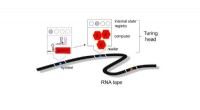
* Transcription: The DNA sequence of a gene is copied into a molecule called messenger RNA (mRNA).
* Translation: The mRNA is read by ribosomes, which use the information to assemble amino acids into a protein.
Here's an analogy: Think of DNA as a cookbook, with each gene representing a recipe. The ingredients for the recipe are the nucleotides, and the recipe itself tells you how to combine them to make a specific protein (the "dish"). The protein then carries out its function in the cell, influencing the organism's traits.
In summary:
* DNA holds the instructions for traits.
* Genes within DNA contain specific instructions.
* The sequence of nucleotides in genes determines the instructions.
* Genes are transcribed and translated into proteins, which carry out functions that affect traits.
This complex process is how the information encoded in DNA ultimately shapes the characteristics of every living organism.