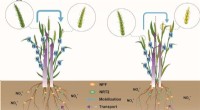
* Sugar Transport: The primary role of phloem is to transport sugars produced during photosynthesis from the leaves to other parts of the plant, such as roots, stems, flowers, and fruits. This process is called translocation.
* Other Organic Molecules: Phloem also transports other organic molecules, including amino acids, hormones, and vitamins.
* Bidirectional Flow: Unlike xylem, which only transports water and minerals upwards, phloem can transport substances in both directions. This allows for the movement of nutrients from storage areas to growing tissues or from actively photosynthesizing areas to areas of high demand.
How Phloem Works:
Phloem is made up of several cell types:
* Sieve Tube Elements: These are elongated cells with perforated end walls called sieve plates. The sieve plates allow for the flow of sap (the sugary fluid) between cells.
* Companion Cells: These are smaller cells located adjacent to sieve tube elements. They provide energy and support to the sieve tube elements.
* Phloem Fibers: These are supporting cells that provide structural strength to the phloem tissue.
* Parenchyma Cells: These cells store food and help regulate the movement of substances within the phloem.
The sap flows through the sieve tube elements due to pressure gradients. Sugars are loaded into the phloem at source areas (e.g., leaves) and unloaded at sink areas (e.g., roots, growing shoots). The difference in osmotic pressure between the source and sink creates a pressure gradient that drives the flow of sap.
In summary, phloem is a vital tissue that ensures the efficient transport of vital nutrients throughout the plant, enabling growth, development, and survival.