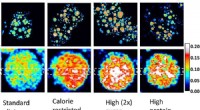
1. Liver: The liver is the central metabolic hub of the body. It plays a crucial role in regulating blood glucose levels, synthesizing and storing glycogen, metabolizing fats and proteins, and detoxifying harmful substances.
2. Muscle: Muscles are responsible for movement and require a constant supply of energy. They play a major role in glucose uptake and utilization, glycogen storage and breakdown, and fatty acid oxidation.
3. Adipose Tissue: Adipose tissue, or fat tissue, is primarily involved in energy storage and release. It also plays a role in hormone production and regulation of inflammation.
These three tissues work together to ensure that the body has a constant supply of energy and to maintain metabolic homeostasis.