Here's why:
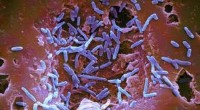
* Binary fission is a form of asexual reproduction where a single-celled organism divides into two identical daughter cells. This is the primary mode of reproduction for prokaryotes, which include bacteria and archaea.
* Mitosis is a form of cell division that occurs in eukaryotic cells (cells with a nucleus and other membrane-bound organelles). It involves the duplication of chromosomes and the division of the nucleus, followed by the division of the cytoplasm.
Key differences:
* Prokaryotes lack a nucleus and other membrane-bound organelles, while eukaryotes have them.
* Prokaryotes have a single circular chromosome, while eukaryotes have multiple linear chromosomes.
* Binary fission is a simpler process than mitosis, involving fewer steps and no spindle fibers.
Therefore, prokaryotes reproduce by binary fission, while eukaryotes reproduce by mitosis.