1. Evolution Provides the Basis for Classification:
* Common Ancestry: Evolutionary theory states that all life on Earth shares a common ancestor. This means that organisms are related through shared ancestry, and their evolutionary relationships form the basis for their classification.
* Diversification: Evolutionary processes like natural selection and genetic drift cause populations to diverge over time, leading to the formation of new species. This diversification is reflected in the branching patterns observed in classification systems.
2. Classification Helps Understand Evolution:
* Tracing Evolutionary History: By analyzing the characteristics of organisms (anatomical, genetic, behavioral), we can trace their evolutionary history and determine their relationships. This information helps reconstruct the evolutionary tree of life.
* Identifying Evolutionary Trends: Classification reveals patterns in the distribution of traits among organisms. These patterns can shed light on evolutionary trends, such as the development of complex features or the adaptation to specific environments.
3. A Dynamic Relationship:
* Changing Classifications: As our understanding of evolutionary relationships improves through new discoveries in genetics, paleontology, and other fields, classification systems are constantly being revised. This reflects the dynamic nature of both evolution and classification.
* New Discoveries: The discovery of new species or the re-evaluation of existing species can lead to changes in classification systems, highlighting the interplay between these two fields.
Example:
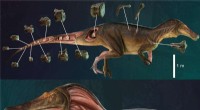
Consider the classification of birds. Initially, birds were classified based on their physical characteristics, like beaks and wings. However, as we gained more knowledge about their evolutionary history through DNA analysis, we discovered that birds are more closely related to dinosaurs than to other reptiles. This led to a re-classification of birds within the dinosaur lineage, highlighting how evolutionary understanding shapes classification.
In essence, evolution provides the underlying framework for classification, and classification provides a tool for understanding and studying evolution. They are two sides of the same coin in the quest to understand the diversity and history of life on Earth.