Here's how it works:
1. Light-dependent reactions: Light energy is absorbed by chlorophyll in the thylakoid membrane, energizing electrons. These electrons are passed along an electron transport chain, releasing energy.
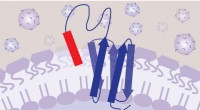
2. Proton pumping: The energy released by the electron transport chain is used to pump protons (H+) from the stroma (the space outside the thylakoids) into the thylakoid lumen (the space inside the thylakoids). This creates a proton gradient, with a higher concentration of protons inside the lumen.
3. ATP synthase: The proton gradient represents stored potential energy. This energy is harnessed by ATP synthase, an enzyme embedded in the thylakoid membrane. Protons flow down their concentration gradient, from the lumen to the stroma, through ATP synthase.
4. ATP production: The flow of protons through ATP synthase drives the production of ATP from ADP and inorganic phosphate (Pi). This process is called chemiosmosis.
So, the movement of protons across the thylakoid membrane, driven by the light-dependent reactions, is the key factor in generating the energy needed to produce ATP in photosynthesis.