Here's how it works:
1. Amino acids: The building blocks of proteins are amino acids. Each amino acid has a central carbon atom attached to an amino group (NH2), a carboxyl group (COOH), a hydrogen atom (H), and a unique side chain (R group).
2. Dehydration synthesis: When two amino acids join together, a water molecule (H2O) is removed. The carboxyl group of one amino acid reacts with the amino group of another amino acid, forming a peptide bond. This bond occurs between the carbon atom of the carboxyl group and the nitrogen atom of the amino group.
3. Polypeptide chain: The repeating sequence of amino acids linked by peptide bonds forms a polypeptide chain. This chain can be very long, containing hundreds or even thousands of amino acids.
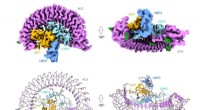
4. Protein folding: After synthesis, the polypeptide chain folds into a specific three-dimensional structure. This structure is determined by the sequence of amino acids and is essential for the protein's function.
So, in essence, peptide bonds are the chemical links that hold amino acids together in a protein chain.