Traditional and evolutionary classifications both aim to organize the diversity of life, but they differ in their underlying principles and approaches:
Traditional Classification (Linnaean Taxonomy):
* Focus: Primarily on observable similarities and differences in physical characteristics (morphology).
* Hierarchy: Uses a hierarchical system (Kingdom, Phylum, Class, Order, Family, Genus, Species) based on shared features.
* Goal: Create a stable and consistent system for naming and organizing organisms, facilitating communication and study.
* Limitations:
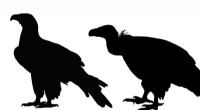
* Can be misleading when organisms have evolved convergent traits (similar features due to similar environments, not shared ancestry).
* Relies heavily on subjective interpretations of similarities.
* Doesn't fully reflect evolutionary relationships.
Evolutionary Classification (Phylogeny):
* Focus: On evolutionary relationships and shared ancestry between organisms.
* Methods: Uses molecular data (DNA, RNA) and anatomical data to construct evolutionary trees (phylogenies).
* Goal: To create a natural system that reflects the evolutionary history of life, emphasizing common ancestry and relationships.
* Advantages:
* More accurate and robust, providing a deeper understanding of how organisms are related.
* Can be used to study the evolution of traits and predict the characteristics of new species.
* Challenges:
* Requires sophisticated techniques for data analysis and interpretation.
* Can be complex and require specialized knowledge.
In summary:
| Feature | Traditional Classification | Evolutionary Classification |
|---|---|---|
| Focus | Observable similarities | Evolutionary relationships |
| Data | Morphological features | Molecular and anatomical data |
| System | Hierarchical system based on shared features | Phylogenetic trees reflecting common ancestry |
| Goal | Stable and consistent system for naming and organizing | Reflecting the evolutionary history of life |
| Advantages | Simple and easily understood | More accurate and robust |
| Limitations | Can be misleading, subjective | Requires specialized knowledge and complex analysis |
Note:
* Both classifications are valuable tools for understanding and studying life.
* Evolutionary classification has become the dominant approach in modern biology, but traditional classification remains important for identification and communication purposes.
* Cladistics is a specific type of evolutionary classification that focuses on shared derived characters (synapomorphies) to reconstruct evolutionary relationships.
The best way to understand the differences is to think of traditional classification as a snapshot of the current state of life and evolutionary classification as a historical narrative of how life evolved.