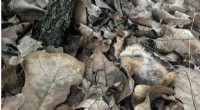
1. Spore Germination: Bracket fungi reproduce by releasing spores. When these spores land on a suitable substrate, like a dead tree trunk or log, they germinate.
2. Hyphae Growth: The spores develop into microscopic threads called hyphae. These hyphae grow and spread throughout the dead wood.
3. Enzyme Secretion: The hyphae secrete powerful enzymes that break down complex organic molecules like cellulose, lignin, and hemicellulose in the wood.
4. Nutrient Absorption: The hyphae absorb the broken-down nutrients from the wood, providing the fungus with its food source.
In essence, bracket fungi act as nature's recyclers, breaking down dead wood and releasing nutrients back into the ecosystem. This process is crucial for the health of forests and other ecosystems.