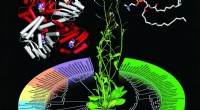
1. Domain: The broadest and most inclusive level of classification. It reflects fundamental differences in cellular structure and evolutionary history.
* Examples: Bacteria, Archaea, Eukarya
2. Kingdom: A large group of organisms that share significant characteristics.
* Examples: Plants (Plantae), Animals (Animalia), Fungi, Protists
3. Phylum (or Division): A group of closely related classes. "Division" is sometimes used for plants.
* Examples: Chordates (animals with a backbone), Arthropods (insects, spiders, crustaceans), Angiosperms (flowering plants)
4. Class: A group of related orders.
* Examples: Mammals (within Chordates), Insects (within Arthropods), Dicotyledons (flowering plants with two seed leaves)
5. Order: A group of closely related families.
* Examples: Primates (within Mammals), Hymenoptera (ants, bees, wasps), Carnivores (within Mammals)
6. Family: A group of closely related genera.
* Examples: Hominidae (great apes), Felidae (cats), Canidae (dogs)
7. Genus: A group of closely related species. The first part of a scientific name.
* Examples: *Homo* (humans), *Panthera* (lions, tigers, leopards), *Canis* (wolves, dogs, coyotes)
8. Species: The most specific level of classification. A group of organisms that can interbreed and produce fertile offspring. The second part of a scientific name.
* Examples: *Homo sapiens* (humans), *Panthera leo* (lion), *Canis lupus* (wolf)
Key Point: This hierarchical system, developed by Carl Linnaeus, allows scientists to organize and classify organisms based on their shared characteristics and evolutionary relationships.