1. The invention of the microscope: This was a revolutionary tool that allowed scientists to magnify objects beyond the limits of the naked eye. Early microscopes, while crude compared to modern versions, allowed the first glimpses into the previously unseen world of cells.
2. Development of advanced microscopy techniques: Over time, scientists developed more powerful and sophisticated microscopy techniques like:
* Electron microscopy: This technique uses a beam of electrons instead of light to illuminate the sample, achieving much higher resolution than traditional light microscopy. This allowed scientists to see the intricate internal structures of cells in detail.
* Fluorescence microscopy: This technique uses fluorescent dyes to label specific molecules within cells, making them visible under a microscope. This allows for the study of specific cellular processes and interactions.
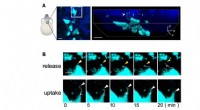
* Confocal microscopy: This technique uses lasers and optical sectioning to create detailed 3D images of cells, revealing their complex architecture and interactions.
These advancements have revolutionized our understanding of cell biology, allowing us to explore the complex workings of these fundamental building blocks of life.