Here's why:
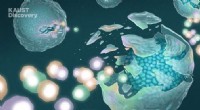
* Endocytosis: The process of engulfing another cell (like a bacterium) requires the cell to invaginate its membrane and form a vesicle around the target. This process is heavily reliant on the cytoskeleton, which provides structural support and helps to manipulate the cell's shape.
* Compartmentalization: Once engulfed, the endosymbiont needs to be separated from the host cell's cytoplasm. The cytoskeleton plays a role in forming the internal membrane compartments that define organelles, which would be necessary for the endosymbiont to eventually become an organelle itself.
* Evolution of Eukaryotic Cells: The evolution of the cytoskeleton was likely a crucial step in the development of eukaryotic cells. The cytoskeleton provides many important functions, including maintaining cell shape, transporting organelles, and facilitating cell division.
While other features, like the nuclear envelope, are also unique to eukaryotes, the presence of a cytoskeleton is likely a prerequisite for the engulfment and subsequent integration of endosymbionts.