1. Initiation:
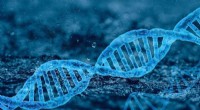
* RNA polymerase (an enzyme) binds to a specific DNA sequence called the promoter, located at the beginning of a gene.
* This binding unwinds the DNA double helix, exposing the template strand.
2. Elongation:
* RNA polymerase moves along the template strand, reading the DNA sequence.
* It uses this sequence as a template to assemble a complementary RNA molecule.
* Instead of thymine (T), RNA uses uracil (U). So, when the polymerase encounters an A on the DNA, it adds a U to the growing RNA strand.
3. Termination:
* RNA polymerase reaches a specific sequence called the terminator on the DNA.
* This signals the end of transcription.
* The RNA polymerase detaches from the DNA, and the newly synthesized RNA molecule is released.
Key points:
* Transcription occurs in the nucleus of eukaryotic cells.
* Only one strand of DNA, called the template strand, is used as a template for RNA synthesis.
* The newly synthesized RNA molecule is called messenger RNA (mRNA).
* mRNA carries the genetic information from DNA to the ribosomes, where protein synthesis occurs.
Here's a simplified analogy:
Imagine DNA as a blueprint and RNA as a copy of that blueprint. Transcription is the process of making the copy.
In summary, the transcription process is:
* DNA → RNA
* Template strand of DNA is used to create a complementary RNA molecule
* RNA polymerase is the enzyme that facilitates the process
* The resulting mRNA carries the genetic information to the ribosomes for protein synthesis.