Here's how:
* Similar Function, Different Ancestry: Analogous organs have similar functions but have very different underlying structures and evolutionary origins. For example, the wings of a bird and the wings of a butterfly both allow for flight, but their skeletal structures are completely different, reflecting their distinct evolutionary lineages.
* Independent Development: The development of analogous structures in unrelated species indicates that these traits evolved independently, driven by similar environmental pressures. This suggests that evolution can produce similar solutions to similar problems, even in organisms that are not closely related.
* Challenge to Special Creation: Analogous organs present a challenge to the concept of special creation, which posits that all organisms were created in their current form. If organisms were created independently, it would be difficult to explain why unrelated species would develop such similar structures for the same purpose.
* Evidence for Natural Selection: The development of analogous organs is consistent with the principles of natural selection. Organisms with traits that allow them to better survive and reproduce in their environment are more likely to pass on those traits to their offspring. Over time, this can lead to the evolution of similar traits in different lineages, even if those lineages are distantly related.
Examples of Analogous Organs:
* Wings of Birds and Insects
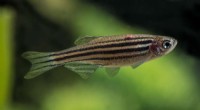
* Streamlined Bodies of Fish and Dolphins
* Eyes of Humans and Octopuses
* Cactus Spines and Thorns of Other Desert Plants
Key Takeaway:
Analogous organs are a compelling example of how evolution can produce similar adaptations in unrelated species, demonstrating that evolution is a powerful force capable of shaping life in diverse ways.