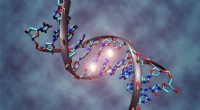
Nucleic acids are complex biopolymers that carry genetic information in the form of a sequence of nucleotides.
Here's why:
* Biopolymers: They are large molecules composed of repeating subunits, called nucleotides.
* Genetic Information: They hold the blueprint for life, encoding instructions for building and maintaining an organism.
* Nucleotide Sequence: The specific order of nucleotides within a nucleic acid molecule determines the genetic information it carries.
There are two main types of nucleic acids:
* Deoxyribonucleic acid (DNA): The primary carrier of genetic information in most organisms. It is a double-stranded helix composed of nucleotides containing deoxyribose sugar, phosphate groups, and one of four nitrogenous bases: adenine (A), guanine (G), cytosine (C), and thymine (T).
* Ribonucleic acid (RNA): Plays a crucial role in protein synthesis and other cellular processes. It is typically single-stranded and composed of nucleotides containing ribose sugar, phosphate groups, and one of four nitrogenous bases: adenine (A), guanine (G), cytosine (C), and uracil (U).
Therefore, the most accurate description of nucleic acids is that they are complex biopolymers that carry genetic information in the form of a sequence of nucleotides.