Here are some prominent scientists and their key contributions to the field of genetics:
Early Pioneers:
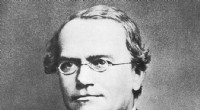
* Gregor Mendel (1822-1884): Known as the "father of genetics," he established the fundamental laws of inheritance through his experiments with pea plants. He discovered the concepts of dominant and recessive traits, segregation, and independent assortment.
* Walter Sutton (1877-1916) and Theodor Boveri (1862-1915): Independently proposed the chromosome theory of inheritance, suggesting that genes reside on chromosomes.
* Thomas Hunt Morgan (1866-1945): Conducted experiments with fruit flies, demonstrating that genes are linked and can be mapped on chromosomes. He received the Nobel Prize in Physiology or Medicine in 1933.
Molecular Genetics Era:
* Frederick Griffith (1877-1941): Discovered the "transforming principle" in bacteria, suggesting that genetic material could be transferred from one organism to another.
* Oswald Avery, Colin MacLeod, and Maclyn McCarty (1944): Identified DNA as the transforming principle, proving it carried genetic information.
* James Watson and Francis Crick (1953): Elucidated the double helix structure of DNA, revolutionizing our understanding of how genetic information is encoded and replicated.
* Rosalind Franklin (1920-1958): Her X-ray diffraction images of DNA were crucial for Watson and Crick's discovery.
* Marshall Nirenberg and Heinrich Matthaei (1961): Cracked the genetic code, determining the correspondence between codons (three-base sequences in DNA) and amino acids.
* Herbert Boyer and Stanley Cohen (1973): Developed the technique of recombinant DNA technology, enabling the transfer of genes between organisms.
Modern Genetics:
* Kary Mullis (1983): Invented the polymerase chain reaction (PCR), a technique used to amplify DNA, revolutionizing genetic research.
* Craig Venter (1995): Led the team that sequenced the first complete genome of a free-living organism, Haemophilus influenzae.
* Francis Collins (2003): Led the Human Genome Project, which mapped the entire human genome, paving the way for new disease diagnostics and therapies.
* Jennifer Doudna and Emmanuelle Charpentier (2012): Developed the CRISPR-Cas9 system, a revolutionary tool for gene editing with vast implications for medicine, agriculture, and biotechnology.
Other notable contributions:
* Barbara McClintock (1902-1992): Discovered transposable elements ("jumping genes"), showing how genetic material can move within a genome.
* Lynn Margulis (1938-2011): Proposed the theory of symbiogenesis, explaining how eukaryotic cells arose from the union of prokaryotic cells.
This list is not exhaustive, and many other scientists have made significant contributions to genetics. It highlights key milestones and individuals who have shaped the field. The field of genetics is constantly evolving, with new discoveries and technologies emerging all the time.