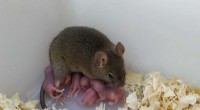
* Organisms are complete, independent living entities capable of carrying out all life processes on their own. They have a defined structure, reproduce, grow, respond to stimuli, and maintain homeostasis.
* Cells are the basic building blocks of life. They are the smallest unit of life that can carry out all the functions necessary for life.
Think of it like this:
* A cell is like a brick. It's a fundamental unit, but it can't build a house on its own.
* An organism is like a house. It's a complex structure made up of many bricks (cells) working together.
Examples:
* A single bacterium is an organism. It's a single cell that can perform all the functions necessary for life.
* A human is an organism made up of trillions of cells working together in complex tissues and organs.
* A red blood cell is a cell, but not an organism. It can't exist independently and relies on the organism (like a human) to function.
Let me know if you have any more questions about cells and organisms!