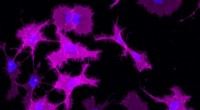
* Simple Structure: Unicellular organisms are single-celled, meaning they lack the complex organization of multicellular organisms. They don't have specialized tissues or organs like a brain.
* Direct Response to Environment: They respond to their environment directly through the cell membrane. Changes in their surroundings trigger immediate reactions within the cell, such as movement towards food or away from harmful substances.
* No Centralized Control: Instead of a brain, unicellular organisms rely on basic cellular processes and direct interactions with their environment for survival.
Think of it this way: Imagine a tiny, self-contained robot that can sense its surroundings and react accordingly. It doesn't need a complex brain; it just needs the right sensors and mechanisms to survive.
While unicellular organisms don't have a brain in the traditional sense, they are incredibly complex and have evolved sophisticated mechanisms to survive and thrive.