1. Source:
* Food proteins: Come from external sources, like plants (beans, rice, etc.), animals (meat, eggs, etc.), or fungi (mushrooms, etc.).
* Organism's proteins: Synthesized internally by the organism using genetic information (DNA) and amino acids obtained from digested food.
2. Structure:
* Food proteins: Have varying structures depending on the source. Some are highly complex, while others are relatively simple.
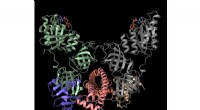
* Organism's proteins: Structures are determined by the specific sequence of amino acids, which is dictated by the organism's genes. These structures allow for specialized functions.
3. Function:
* Food proteins: Serve as a source of essential amino acids for the organism to build its own proteins. They don't directly perform functions in the organism until broken down and reassembled.
* Organism's proteins: Perform diverse functions in the body, such as:
* Structural: Building tissues (like muscles, hair, skin).
* Enzymatic: Catalyzing biochemical reactions.
* Transport: Moving molecules around the body (like hemoglobin carrying oxygen).
* Hormonal: Regulating various bodily processes.
4. Digestion and Absorption:
* Food proteins: Broken down into individual amino acids through digestion in the stomach and small intestine.
* Organism's proteins: Not broken down for absorption, but may be recycled (broken down and reassembled) for new protein synthesis.
5. Genetic Information:
* Food proteins: Don't carry genetic information of the source organism.
* Organism's proteins: Encoded by the organism's DNA, reflecting the genetic makeup of the individual.
In summary:
Food proteins are foreign molecules that need to be broken down and reassembled into the organism's own proteins. These proteins then serve various essential functions within the organism's body, dictated by its unique genetic code.