1. Universal Genetic Code: All living organisms use the same basic genetic code, meaning that DNA sequences can be translated into proteins in the same way across all life. This suggests a common ancestor from which all life descended.
2. Homologous Structures: Comparing DNA sequences of different species reveals similarities, even in organisms that look vastly different. These similarities, called homologous structures, are evidence of shared ancestry. For example, the DNA sequences for the development of limbs in humans, whales, and bats are remarkably similar, suggesting a common ancestor that had limbs, even though these structures have evolved into very different forms.
3. Molecular Clocks: The rate of mutation in DNA is relatively constant. By comparing DNA sequences between species, we can estimate the time since they shared a common ancestor. This technique, known as the molecular clock, provides a powerful tool for understanding evolutionary relationships and timelines.
4. Pseudogenes and Endogenous Retroviruses: Pseudogenes are inactive copies of genes that have lost their function. Endogenous retroviruses are remnants of viral DNA that have integrated into the host genome. These non-functional sequences are passed down through generations and accumulate mutations over time. By comparing these sequences in different species, we can trace evolutionary relationships and estimate time since divergence.
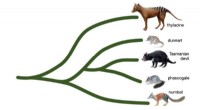
5. Phylogenetic Trees: By analyzing DNA sequences, we can construct phylogenetic trees, which represent evolutionary relationships between organisms. These trees are constantly being refined and updated as new data becomes available.
6. Genetic Evidence for Adaptation: DNA analysis can identify specific genetic changes that have occurred in response to environmental pressures, providing evidence for natural selection and adaptation. For example, studies have shown how genetic changes in certain populations have enabled them to adapt to high altitudes, resist diseases, or digest specific foods.
7. Genetic Variation within Species: The variation in DNA sequences within a species provides the raw material for evolution. Natural selection acts on these variations, favoring those that provide a reproductive advantage.
In summary, DNA provides strong evidence for the theory of descent with modification by:
* Demonstrating a universal genetic code.
* Revealing homologous structures.
* Allowing for molecular clocks to estimate time since divergence.
* Providing evidence from pseudogenes and endogenous retroviruses.
* Enabling the construction of phylogenetic trees.
* Identifying genetic changes related to adaptation.
* Showcasing the genetic variation that fuels evolution.
Overall, DNA evidence has revolutionized our understanding of evolutionary relationships and provides compelling support for the theory of descent with modification.