1. Cell Theory:
* All living organisms are composed of cells.
* Cells are the basic unit of structure and function in all living organisms.
* All cells arise from pre-existing cells.
2. Hierarchy of Organization:
* Life is organized into a hierarchical system, from atoms to the biosphere.
* Each level of organization builds upon the one below it.
* This hierarchy allows for emergent properties at each level.
3. Flow of Energy and Matter:
* Living organisms require a constant input of energy.
* This energy is used to maintain order and perform work.
* Matter cycles through ecosystems.
4. Interdependence of Organisms:
* All living organisms interact with each other and their environment.
* These interactions can be beneficial, harmful, or neutral.
* Ecosystems are made up of interconnected webs of life.
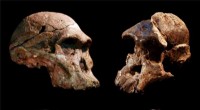
5. Evolution:
* All living organisms share a common ancestor.
* Over time, populations change through the process of natural selection.
* Evolutionary adaptation leads to the diversity of life on Earth.
6. Regulation and Homeostasis:
* Living organisms maintain a stable internal environment.
* This stability is achieved through feedback mechanisms.
* Homeostasis is essential for survival.
7. Information Flow and Genetics:
* Genetic information is stored in DNA and passed from one generation to the next.
* Genes control the development and function of organisms.
* Genetic mutations are the raw material for evolution.
8. Structure and Function:
* The structure of a biological component determines its function.
* This applies to all levels of biological organization, from molecules to ecosystems.
* Examples include the shape of an enzyme, the structure of a leaf, or the organization of a community.
9. Unity and Diversity:
* While all living organisms share fundamental characteristics, they also exhibit incredible diversity.
* This diversity is a product of evolution.
* Understanding both unity and diversity is essential for understanding life.
These themes are interconnected and provide a framework for understanding the complexity and wonder of the living world. They guide scientific inquiry and help us make sense of the vast amount of information about life on Earth.