Here's the breakdown:
* Early Life: The first life on Earth was single-celled, like bacteria and archaea. Over millions of years, these single-celled organisms evolved and some of them started to form colonies, where they lived together.
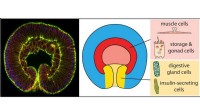
* Cooperation and Specialization: Within these colonies, cells began to specialize and cooperate, leading to the development of multicellular organisms. Think of it like a team of workers, each with a specific role.
* Cellular Fusion: In some cases, the individual cells that formed these colonies essentially fused together, becoming part of a larger, unified organism.
So, while multicellular organisms are descendants of single-celled organisms, they are not made up of independent single-celled organisms within their bodies. The cells within a multicellular organism are specialized and interconnected, forming tissues, organs, and systems that work together to create a complex whole.
Let me know if you have any other questions!