* Presence of a nucleus: This is the most defining feature of eukaryotes. If you observe a cell with a distinct, membrane-bound nucleus containing the cell's genetic material (DNA), it is almost certainly eukaryotic.
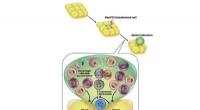
* Presence of membrane-bound organelles: Eukaryotic cells are characterized by having specialized internal compartments, called organelles, surrounded by membranes. Examples include mitochondria, Golgi apparatus, endoplasmic reticulum, and lysosomes. Observing these structures in a cell would strongly suggest it is eukaryotic.
* Larger size and complexity: Eukaryotic cells are generally larger and more complex than prokaryotic cells. This is partly due to the presence of organelles and a cytoskeleton that provides structural support.
* Presence of cytoskeleton: Eukaryotic cells have a complex internal framework of protein fibers (microtubules, microfilaments, and intermediate filaments) that provide structural support and enable movement within the cell. Observing these structures would further support the eukaryotic nature of the cell.
However, it's important to note:
* Some eukaryotes lack typical structures: Certain eukaryotes, like red blood cells, lack a nucleus in their mature form.
* Prokaryotes can have complex structures: While less complex, some prokaryotes have internal membranes that resemble eukaryotic organelles in function, making identification based solely on these structures unreliable.
Therefore, identifying a cell as eukaryotic requires a combination of observations and analysis. Observing a nucleus, membrane-bound organelles, a complex cytoskeleton, and a larger size would all strongly suggest a eukaryotic cell.