Here's why:
* Plant cells can be quite large, with some reaching up to 100 micrometers in diameter. They have a rigid cell wall made of cellulose, which provides structural support and allows them to grow to significant sizes.
* Animal cells are generally smaller than plant cells, ranging from 10 to 30 micrometers in diameter. They lack a cell wall, so their size is limited by the flexibility of their cell membrane.
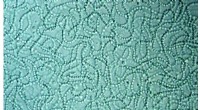
* Bacterial cells are the smallest of the three, typically ranging from 0.5 to 10 micrometers in diameter. They are single-celled organisms and have a simple structure compared to plant and animal cells.
So, in terms of size, the order is:
1. Plant cells (largest)
2. Animal cells
3. Bacterial cells (smallest)