Fundamental Differences:
* Structure:
* Human cells: Eukaryotic cells, meaning they have a nucleus that contains their DNA, as well as other membrane-bound organelles (like mitochondria, Golgi apparatus, etc.).
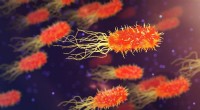
* E. coli cells: Prokaryotic cells, meaning they lack a nucleus and other membrane-bound organelles. Their DNA is located in a region called the nucleoid.
* Size:
* Human cells: Generally larger, ranging from 10 to 100 micrometers in diameter.
* E. coli cells: Smaller, typically around 1 to 2 micrometers in diameter.
* DNA Structure:
* Human cells: Linear DNA packaged into chromosomes within the nucleus.
* E. coli cells: Circular DNA located in the nucleoid region.
* Reproduction:
* Human cells: Reproduce through mitosis (cell division), resulting in two identical daughter cells.
* E. coli cells: Reproduce through binary fission, where a single cell divides into two identical daughter cells.
* Metabolism:
* Human cells: Complex metabolic processes, including aerobic respiration (using oxygen) and anaerobic respiration (without oxygen).
* E. coli cells: More diverse metabolic pathways, including the ability to use a wide range of nutrients and perform fermentation.
Other Key Differences:
* Organelles: Human cells have a variety of specialized organelles, such as mitochondria, Golgi apparatus, endoplasmic reticulum, lysosomes, etc. E. coli cells lack these.
* Cell Wall: Human cells have a cell membrane, but lack a rigid cell wall. E. coli cells have a rigid cell wall composed of peptidoglycan.
* Complexity: Human cells are significantly more complex than E. coli cells, with a much larger genome and more sophisticated signaling pathways.
* Viruses: Human cells are susceptible to a wide variety of viruses, while E. coli is susceptible to a different set of viruses.
Similarities:
* Basic Cellular Functions: Both human and E. coli cells share fundamental cellular processes, such as protein synthesis, energy production, and membrane transport.
* Genetic Material: Both types of cells use DNA as their genetic material.
In Summary:
Human cells are eukaryotes with a complex internal structure and a highly regulated metabolic system, while *E. coli* cells are prokaryotes with a simpler structure and more diverse metabolic capabilities. Despite these differences, both types of cells share fundamental cellular processes and rely on DNA as their genetic material.