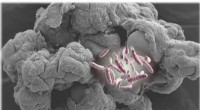
* Bacteria: Prokaryotic organisms that lack a nucleus and other membrane-bound organelles.
* Archaea: Prokaryotic organisms that share some similarities with bacteria but also have unique characteristics, including the ability to thrive in extreme environments.
* Eukarya: Organisms that possess a nucleus and other membrane-bound organelles. This domain includes plants, animals, fungi, and protists.
Within the domain Eukarya, there are further divisions into various kingdoms, depending on the specific classification system used. However, the six-kingdom system (Monera, Protista, Fungi, Plantae, Animalia, and Archaebacteria) is considered outdated.
Here's why the six-kingdom system is no longer accepted:
* Phylogenetic analysis: Advances in molecular biology and phylogenetic analysis have shown that archaea are more closely related to eukaryotes than to bacteria. This led to the three-domain system, which better reflects the evolutionary relationships between life forms.
* Diversity within kingdoms: The six-kingdom system grouped organisms based on a few shared characteristics, leading to a lack of clarity about the diversity within each kingdom. For example, the kingdom Protista includes a wide range of organisms with diverse evolutionary histories.
* Emerging research: Ongoing research continues to uncover new information about the relationships between organisms, leading to revisions in classification systems.
Therefore, while the six-kingdom system was a helpful framework in its time, it has been surpassed by more accurate and comprehensive systems that reflect our current understanding of the diversity and evolution of life on Earth.