1. Anchoring and Stability:
* Strong Attachment: Organisms need to be securely anchored to avoid being swept away. This can involve strong roots (plants), clinging structures (barnacles), or even burrowing into the substrate (invertebrates).
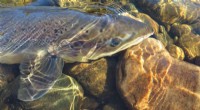
* Streamlined Body Shape: A streamlined body reduces drag and helps organisms maintain their position. This is common in fish with a torpedo-like shape or flat bodies that hug the stream bed.
* Weight Distribution: Organisms like fish may have heavier heads or tails to help them resist the current.
2. Resistance to Flow:
* Tough External Covering: Many organisms possess a tough, protective outer layer like shells (mussels), thick cuticles (insects), or scales (fish) to resist abrasion from rocks and the water flow.
* Flexible Bodies: Some organisms, like water striders, have flexible bodies that allow them to bend and adjust to the force of the current.
* Grip-Like Appendages: Organisms like clinging crabs have strong claws or appendages that help them grasp rocks and resist the current.
3. Nutrient Acquisition:
* Efficient Filtering: Organisms like filter-feeding fish and invertebrates have evolved specialized structures to capture food particles from the flowing water. This might involve gills with fine filaments or feathery appendages.
* Strong Currents: The flow of water can bring abundant food sources to filter feeders. However, they need to be able to handle the force of the current and efficiently capture food from the water column.
4. Reproduction and Development:
* Larval Stages: Many species have larval stages that can disperse downstream. These larvae may have adaptations for surviving the journey and eventually settling in suitable habitats.
* Sticky Eggs: Organisms like insects may lay their eggs on surfaces where they will be protected from the current.
* Internal Fertilization: Some species, like fish, may practice internal fertilization to avoid the risk of eggs being washed away.
5. Other Adaptations:
* Coloration: Camouflage can be crucial in fast flowing waters. Organisms may adopt colors and patterns that blend in with their surroundings, making them less visible to predators or prey.
* Oxygen Uptake: Fast-flowing water tends to be oxygen-rich. Organisms may have adapted to take advantage of this, possessing gills or other respiratory structures that efficiently absorb oxygen.
These are just some of the many adaptations that organisms have evolved to live in fast flowing water. The diversity of life in these habitats is a testament to the amazing abilities of nature to overcome challenges and find ways to thrive.