Here's why:
* DNA: The nucleus houses the cell's DNA (deoxyribonucleic acid). DNA is like a blueprint containing the genetic code that dictates the order of amino acids in proteins.
* Genes: Segments of DNA called genes hold the instructions for specific proteins.
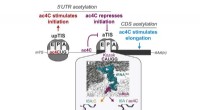
* Transcription: The DNA code is copied into a messenger molecule called RNA (ribonucleic acid) in a process called transcription. This RNA copy then travels out of the nucleus.
* Translation: The RNA molecule is used to assemble amino acids into proteins in the cytoplasm, a process called translation.
So, while the nucleus doesn't directly build proteins, it contains the instructions that are essential for protein synthesis to happen.