Here's a breakdown:
* Polymer: A large molecule composed of many smaller repeating units called monomers.
* Monomer: A small molecule that can join with other monomers to form a polymer.
How it works:
1. Monomers link together: Monomers react with each other to form covalent bonds, creating a long chain.
2. Repeating units: The chain grows as more monomers add on, creating a structure with repeating units.
Examples of Polymerization:
* Proteins: Made from amino acid monomers.
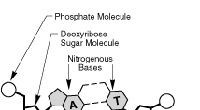
* Nucleic acids (DNA & RNA): Made from nucleotide monomers.
* Polysaccharides (like starch): Made from sugar monomers.
* Plastics: Made from synthetic monomers like polyethylene.
Key points:
* Polymerization is a fundamental process in biology and chemistry.
* It creates complex molecules from simpler ones, allowing for a vast array of structures and functions.
* The type of monomer and the way they bond determine the properties of the resulting polymer.
Let me know if you'd like to explore any of these examples in more detail!