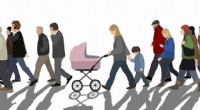
1. Variation: Individuals within a population have slight differences in their traits, like size, color, or behavior. These variations are often due to genetic mutations.
2. Heredity: These variations are passed down from parents to offspring.
3. Overproduction: Organisms produce more offspring than the environment can support. This leads to competition for resources.
4. Differential survival and reproduction: Organisms with traits better suited to their environment are more likely to survive, reproduce, and pass on their genes. Those with less advantageous traits are less likely to survive and reproduce.
5. Gradual change: Over generations, the frequency of advantageous traits increases in the population, while less advantageous traits become less common. This leads to gradual changes in the population over time, eventually resulting in the evolution of new species.
Important points to remember:
* Evolution is not a linear process: It's a branching process where multiple species can evolve from a common ancestor.
* Evolution is not goal-oriented: It doesn't have a predetermined path. The direction of evolution is driven by environmental pressures and chance events.
* Natural selection is the primary mechanism of evolution: However, other factors like genetic drift (random changes in gene frequency) and gene flow (migration) also play a role.
In summary, evolution by natural selection is a powerful force that drives the diversity of life on Earth. It's a process that relies on variation, heredity, overproduction, and differential survival and reproduction to shape organisms over time.