* Storing the cell's DNA: The nucleus contains the genetic instructions for the cell in the form of DNA. This DNA is organized into chromosomes.
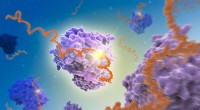
* Transcription: The nucleus uses the DNA to produce RNA, which carries the genetic instructions to the ribosomes for protein synthesis.
* Replication: Before a cell divides, the nucleus replicates its DNA to ensure each daughter cell receives a complete copy.
* Regulation of gene expression: The nucleus controls which genes are active and inactive, determining which proteins the cell produces. This allows for the cell to adapt to changing conditions and perform its specific functions.
In essence, the nucleus is like the "brain" of the cell, dictating what the cell does and how it functions.