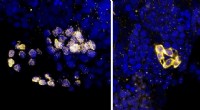
Key Observations to Look For:
* Presence of a Nucleus: Eukaryotic cells have a well-defined nucleus that houses their genetic material (DNA). This is the most defining characteristic. Look for a distinct, often spherical, structure within the cell.
* Membrane-Bound Organelles: Eukaryotic cells have a variety of internal compartments called organelles, each with specific functions. These organelles are surrounded by membranes. Examples include:
* Mitochondria: Powerhouses of the cell, responsible for energy production.
* Golgi Apparatus: Modifies, packages, and sorts proteins.
* Endoplasmic Reticulum (ER): A network of membranes involved in protein synthesis and lipid production.
* Lysosomes: Contain enzymes for breaking down cellular waste.
* Chloroplasts (in plants): Responsible for photosynthesis.
* Larger Size: Generally, eukaryotic cells are significantly larger than prokaryotic cells. This is due to their complex internal structures.
Important Note: You'll need a microscope to see these features, especially the internal organelles.
Examples:
* Animal Cells: Observe a nucleus, mitochondria, Golgi apparatus, ER, lysosomes.
* Plant Cells: Observe a nucleus, mitochondria, Golgi apparatus, ER, lysosomes, and chloroplasts.
Contrast with Prokaryotes:
* Prokaryotic cells (like bacteria and archaea) lack a nucleus and membrane-bound organelles. Their DNA is located in a region called the nucleoid, but it's not enclosed within a membrane.
Let me know if you'd like more details about any of these structures!