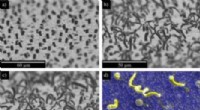
1. Microscopic size: All three are too small to be seen with the naked eye and require microscopes for observation.
2. Ubiquitous presence: They are found everywhere in the environment, including soil, water, air, and even inside living organisms.
3. Ability to cause disease: Some bacteria, viruses, and fungi can cause infections in humans, animals, and plants.
4. Importance in ecosystems: They play crucial roles in various ecosystems, such as decomposition, nutrient cycling, and food webs.
Here's a breakdown of their differences:
Bacteria:
* Prokaryotes: Lack a nucleus and other membrane-bound organelles.
* Unicellular: Single-celled organisms.
* Reproduce by binary fission: A simple form of cell division.
* Can be killed by antibiotics: Many antibiotics target specific bacterial processes.
Viruses:
* Non-living: Not considered truly alive because they lack the ability to reproduce independently.
* Composed of genetic material (DNA or RNA) and a protein coat: They can only replicate by infecting and hijacking a host cell.
* Can be treated with antiviral medications: These medications often target specific viral proteins.
Fungi:
* Eukaryotes: Have a nucleus and other membrane-bound organelles.
* Multicellular (except yeasts): Can be single-celled (yeasts) or form complex, multicellular structures like mushrooms.
* Reproduce by spores: Tiny, reproductive units that can spread easily.
* Treated with antifungal medications: These medications target specific fungal processes.
In summary, while bacteria, viruses, and fungi share some commonalities, they are distinct organisms with unique characteristics and different mechanisms for causing disease.