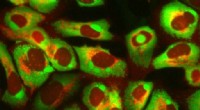
Tissue is a group of similar cells that work together to perform a specific function.
Here's why this is a strong definition:
* Similar Cells: Tissues are not just random collections of cells. The cells within a tissue share a common origin and have specialized structures that allow them to work together.
* Specific Function: Tissues don't just exist for the sake of existing. They are organized to perform specific tasks within the body, such as muscle contraction, nutrient absorption, or protection from the environment.
Examples of Tissues:
* Muscle tissue: Composed of cells that can contract, enabling movement.
* Nervous tissue: Contains cells that transmit signals throughout the body.
* Connective tissue: Provides support, structure, and insulation.
* Epithelial tissue: Forms linings and coverings for organs and cavities.
Important Note: While the above definition is a good starting point, it's essential to remember that the concept of "tissue" can be nuanced and specific to the context. For instance, in biology, "tissue" can also refer to a thin sheet of material used for cultures and experiments.