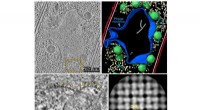
Intracellular concentration refers to the concentration of a specific molecule or ion inside a cell. This is distinct from extracellular concentration, which describes the concentration of the same molecule or ion in the fluid surrounding the cell.
Why is intracellular concentration important?
* Cellular function: The concentration of various molecules and ions inside a cell determines its ability to carry out its functions.
* For example, the concentration of potassium ions (K+) is higher inside cells than outside, contributing to the membrane potential and nerve impulse transmission.
* The concentration of ATP, a crucial energy molecule, is also critical for cellular processes.
* Maintaining homeostasis: Cells need to maintain a stable internal environment, known as homeostasis. This includes controlling the concentration of various molecules and ions within the cell.
* Cellular signaling: Changes in intracellular concentration can act as signals, triggering specific cellular responses.
* For example, a rise in calcium ions (Ca2+) inside a muscle cell triggers muscle contraction.
Factors influencing intracellular concentration:
* Membrane permeability: The cell membrane controls the movement of molecules and ions in and out of the cell. Some substances can pass through freely, while others require specialized transport mechanisms.
* Active transport: Cells use energy to move molecules against their concentration gradient, maintaining a specific intracellular concentration. For example, the sodium-potassium pump pumps sodium ions (Na+) out of the cell and potassium ions (K+) into the cell, against their concentration gradients.
* Cellular metabolism: Chemical reactions within the cell can produce or consume specific molecules, altering their intracellular concentration.
* External environment: Changes in the extracellular environment can affect the intracellular concentration. For example, changes in the concentration of glucose in the blood can influence its concentration inside cells.
Measuring intracellular concentration:
Various techniques can be used to measure intracellular concentration, including:
* Spectrophotometry: This technique uses light absorption to measure the concentration of specific molecules.
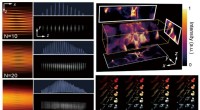
* Fluorescence microscopy: This technique uses fluorescent probes to visualize and quantify the concentration of specific molecules within cells.
* Chromatography: This technique separates different molecules based on their properties, allowing for the quantification of specific molecules within a cell.
In summary, intracellular concentration is a crucial aspect of cellular function and plays a role in maintaining homeostasis, cell signaling, and regulating various cellular processes. Understanding the factors influencing intracellular concentration is essential for understanding how cells work and how they respond to changes in their environment.