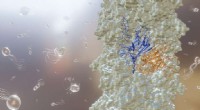
Transcription is the first step in gene expression, where the genetic information stored in DNA is copied into a messenger molecule called messenger RNA (mRNA). This mRNA molecule then carries the genetic instructions to the ribosomes, where protein synthesis occurs.
Here's a breakdown of the process:
1. Initiation:
* RNA polymerase binds to the promoter: The process starts with RNA polymerase, an enzyme responsible for transcribing DNA into RNA, binding to a specific DNA sequence called the promoter located at the beginning of a gene. The promoter acts as a signal for RNA polymerase to start transcription.
* Unwinding the DNA double helix: RNA polymerase unwinds the DNA double helix at the promoter region, separating the two strands.
2. Elongation:
* RNA synthesis: Using one of the DNA strands as a template, RNA polymerase reads the DNA sequence and builds a complementary RNA molecule, following the base pairing rules (A with U, C with G). However, instead of thymine (T), RNA uses uracil (U).
* Movement of RNA polymerase: RNA polymerase moves along the DNA template strand, extending the RNA chain nucleotide by nucleotide.
* Formation of the RNA transcript: As RNA polymerase progresses, the newly synthesized RNA molecule detaches from the DNA template, leaving the DNA double helix to rewind.
3. Termination:
* Recognition of the terminator: RNA polymerase encounters a specific DNA sequence called the terminator, signaling the end of the gene.
* Release of RNA transcript: The RNA polymerase releases the completed RNA transcript, which is now free to move out of the nucleus and into the cytoplasm.
Key Features of Transcription:
* Specificity: The process is highly specific, meaning that only the DNA sequence corresponding to the desired gene is transcribed.
* Regulation: Transcription can be regulated by various factors, such as transcription factors, which can bind to the promoter region and either enhance or inhibit transcription.
* Multiple transcripts: A single gene can be transcribed multiple times, leading to the production of multiple RNA transcripts.
* Processing of RNA transcripts: After transcription, the RNA transcript undergoes further processing, including capping, splicing, and polyadenylation, to become mature mRNA ready for translation.
Overall, transcription plays a critical role in gene expression by converting the genetic information encoded in DNA into a form that can be used to synthesize proteins. This process ensures that the correct proteins are produced at the right time and in the right amounts.