Here's why:
* Prior to microscopes: People had no way to see the tiny structures that make up living organisms. They could only observe the macroscopic world.
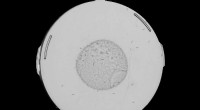
* Early microscopes: Early microscopes, though crude, allowed scientists to see things like cells for the first time. Robert Hooke's observations of cork cells in the 1660s were a landmark moment.
* Improved microscopes: As microscopes improved, scientists were able to see more detail and make more accurate observations. This led to the identification of various cell structures and functions, ultimately contributing to the formulation of cell theory.
While the microscope was essential, other scientific contributions played a role:
* Anton van Leeuwenhoek's observations: His observations of microscopic organisms (animalcules) in the late 1600s further emphasized the importance of the microscopic world.
* The work of Schleiden and Schwann: Their studies in the 1830s, which revealed the universality of cells in plants and animals, were critical in solidifying the concept of cell theory.
In essence, the microscope provided the necessary tool for scientists to observe and understand the building blocks of life, paving the way for the development of cell theory.