Unicellular Organisms:
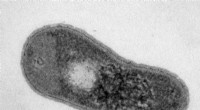
* Complete, independent organisms: They are single-celled entities that carry out all life functions (e.g., nutrition, reproduction, excretion) within their single cell.
* Self-sufficient: They are capable of independent survival and reproduction.
* Diverse functions: A single cell performs all the tasks necessary for life.
* Simple structure: They lack specialized tissues, organs, or organ systems.
* Examples: Bacteria, amoeba, paramecium, yeast.
Single Cells of Multicellular Organisms:
* Specialized units: They are part of a larger, multicellular organism and are specialized for specific functions.
* Dependent on the organism: They cannot survive independently and rely on other cells for survival.
* Limited functions: They perform a specific function within the organism.
* Complex structure: They may have specialized structures within the cell to carry out their specific function.
* Examples: Muscle cells, nerve cells, skin cells.
Here's a table summarizing the key differences:
| Feature | Unicellular Organism | Single Cell of Multicellular Organism |
|---|---|---|
| Nature | Complete organism | Part of a larger organism |
| Self-sufficiency | Independent | Dependent |
| Function | Performs all life functions | Specialized function |
| Structure | Simple | May be complex and specialized |
| Examples | Bacteria, amoeba, yeast | Muscle cell, nerve cell, skin cell |
In essence, while both unicellular organisms and single cells of multicellular organisms are individual cells, their roles and capabilities differ significantly. Unicellular organisms are self-sufficient, complete life forms, while single cells within a multicellular organism are specialized units that contribute to the overall functioning of the organism.