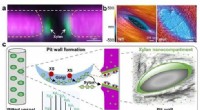
* Organization: Living things are highly organized, with specialized structures at different levels (from cells to organs to organisms).
* Metabolism: Living organisms carry out a complex set of chemical reactions to acquire and use energy for growth and maintenance.
* Homeostasis: They maintain a stable internal environment despite fluctuations in the external environment.
* Growth and development: Living things increase in size and complexity over time.
* Reproduction: They create new individuals to ensure the continuation of their species.
* Responsiveness: They react to stimuli in their environment.
* Adaptation: They evolve over time to better suit their environment.
While these properties are present in varying degrees across different life forms, they are not found in nonliving matter. This is why looking at these properties helps to distinguish between living and nonliving.
It's important to note that no single property defines life, and some nonliving entities may exhibit some of these properties. However, the combination of these properties is what sets living organisms apart.